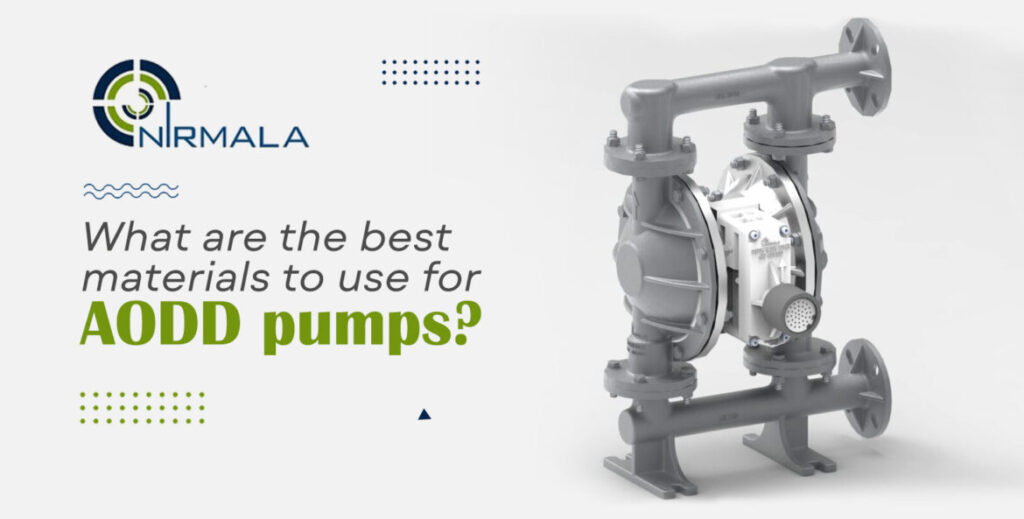
Before selecting the appropriate air-operated double-diaphragm (AODD) pump materials for your application, consider the following fluid characteristics: temperature, abrasiveness, viscosity, and general chemical compatibility.
Selecting the appropriate materials for an AODD pump is critical to achieving peak performance and safety. Understanding the diaphragm pump material selection process can help reduce downtime and improve performance and profitability.
Choosing the Right AODD Pump Material
There are certain general criteria to follow when selecting materials for air-operated double-diaphragm (AODD) pumps.
Metal AODD pumps, for example, are widely utilized in high-pressure applications and grounding-required settings. Stainless steel, in particular, is a popular choice for food and personal care applications due to FDA regulations. Plastic AODD pumps, on the other hand, are widely employed in chemical and petrochemical industries because of their corrosion resistance.
Chemical compatibility is the first consideration when it comes to consumable components and accessories like diaphragms, valve balls, valve seats, and valve seat o-rings. For example, FDA-compliant Hytrel is commonly used in food processing.
It’s crucial to realize that these are not hard and fast laws. Choosing an AODD pump is more difficult than following a single piece of generic advice. The selection frequently necessitates an elimination procedure that begins with the stuff you’re pushing and then takes into account your budget and other considerations.
While choosing the correct materials for an AODD pump might be difficult, you’re not alone. We developed this blog article to answer common queries concerning AODD pump material choices.
Commonly Used Materials in AODD pumps
1. Pump Body Materials
The pump body is the outer shell of the AODD pump. It needs to be strong enough to handle the fluid and tough working conditions.
Aluminum: This is a lightweight and cost-effective material. It’s good for pumping oils, fuels, and light chemicals. However, it’s not suitable for acidic or corrosive fluids.
Stainless Steel: A strong and durable material that resists rust and corrosion. It works well in food processing, chemical, and pharmaceutical industries. It can handle hot, harsh, and aggressive fluids.
Cast Iron: A good choice for rough environments like mining or construction. It’s heavy but strong and low cost. Not ideal for corrosive fluids.
PTFE (Teflon): This plastic is extremely resistant to chemicals. It is often used when the fluid is highly aggressive or reactive. It’s one of the most chemical-resistant materials available, though it is more expensive.
2. Diaphragm Materials
The diaphragm is the flexible part that moves back and forth to pump the fluid. It has direct contact with the liquid, so its material is crucial.
Santoprene: A long-lasting and chemical-resistant material. It is good for general use, including acids and bases. It also resists wear and tear.
PTFE (Teflon): Like the pump body, Teflon diaphragms are excellent for highly aggressive chemicals. They can handle extreme conditions, though they are stiffer and more costly.
EPDM: Great for water, alcohols, and some chemicals. It’s flexible and affordable, but not ideal for oils or solvents.
Neoprene: A good general-purpose material for less aggressive fluids. It works well in low-temperature conditions.
Buna-N (Nitrile): Ideal for oils, fuels, and some chemicals. It is not recommended for acidic or highly corrosive fluids.
Key Takeaway
AODD pumps are flexible and reliable, but their performance depends a lot on the materials used. By picking the right combination of pump body and diaphragm materials, you can get the most out of your pump and avoid costly problems in the future.

Nirmala Pumps & Equipments
Nirmala Pumps & Equipments is an Indian company that manufactures and supplies pump systems, valves, strainers, and pneumatic pumps since 1989. We provide services to different industries, both domestically and internationally, such as citrus, distilling, wastewater treatment, and petroleum.