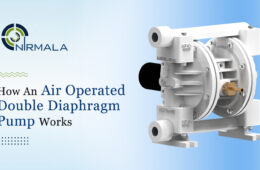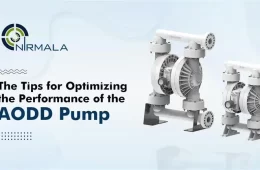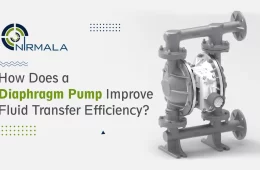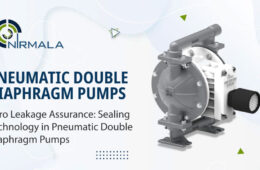
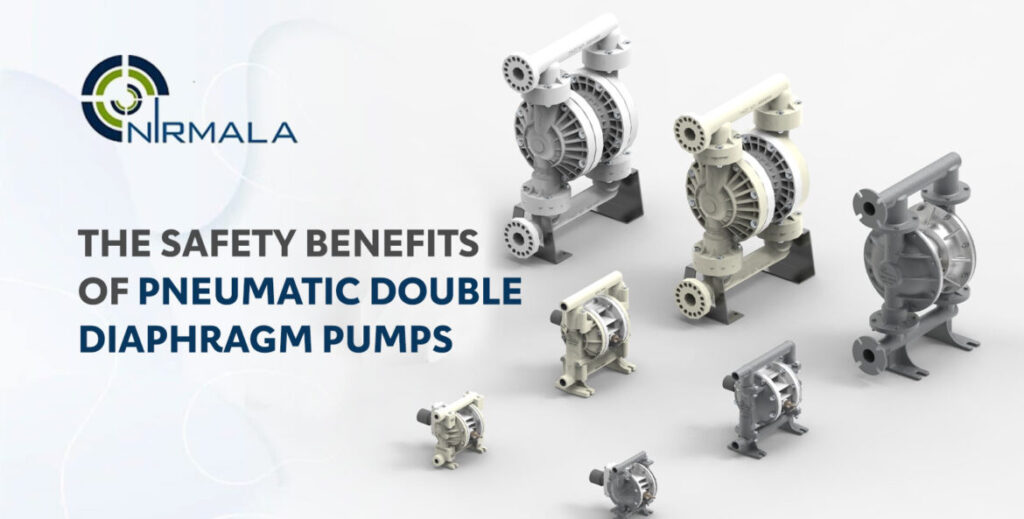
Though there are several pump types available, including positive displacement, centrifugal, lobe, gear, screw, hose, and piston/plunger, one choice stands out for its versatility and dependability. A hybrid displacement pump, also known as a pneumatic double diaphragm pump, needs minimal maintenance and can handle a wide range of fluids in the toughest situations.
Pneumatic Double Diaphragm Pump Features and Advantages
AODD pumps defy categorization. They are similar to centrifugal pumps in terms of pressure-to-capacity characteristics and mobility. The similarities cease there.
AODD pumps are air-powered (some versions also have natural gas capabilities), which keeps the pump diaphragm balanced during pumping. This increases diaphragm life beyond that of mechanically operated diaphragm pumps, resulting in lower maintenance and reduced downtime.
In addition to requiring less maintenance, air-operated double diaphragm pumps have other advantages.
- The pump does not require power and may be properly grounded to assure its safety.
- Air-operated pumps handle solid-laden fluids without hurting either the pump or the product.
- They are self-priming and capable of dry running.
- Pneumatic double diaphragm pumps can be run continuously or intermittently without causing damage to the pump or system.
- They have a low initial purchase price and do not require any additional setup controls, offering excellent value when compared to other pump technologies.
- Deadhead safely, with no pump or product damage and a smooth restart.
- AODD pumps are shear sensitive and do not shear or separate the product.
- They are submersible (in certain variants); they can be totally immersed without compromising safety or performance.
- They have a seal-less design, which eliminates the need for expensive mechanical seals or packaging.
- These pumps provide changeable flow and head pressures while performing without complicated controls.
- They have a number of port choices, including bottom discharge, to accommodate a wide range of fluid properties.
These pumps are run-dry capable
Pneumatic double diaphragm pumps may run dry for a long time without causing damage to the pump or its components. Pumps frequently run dry, particularly during pit dewatering, tanker unloading, and tank over-applications. Running dry may cause harm to other types of positive displacement pumps, reducing their service life.
Air-operated diaphragm pumps deadhead securely
Deadheading happens when the fluid pressure is equal to the air input pressure that drives the pump. When a valve on the pump’s fluid side is closed, the pump generates pressure until it reaches equilibrium and stops pumping. When the pump’s discharge fluid valve is opened, it will resume pumping.
These pumps use a sealless construction
AODD pumps do not utilize or require costly mechanical seals to function. Instead, reciprocating elastomeric diaphragms and valve checks draw the product into the pump and push it out, resulting in a pumping action. This idea is incredibly forgiving and cost-effective.
Conclusion
For a variety of reasons, pneumatic double diaphragm pumps have become indispensable in a wide range of sectors. They are efficient, dependable, safe, cost-effective, simple to maintain, and can handle everything from water to solid-laden slurries. Nirmala Pumps also provides reliable industrial pumps at affordable prices.

Nirmala Pumps & Equipments
Nirmala Pumps & Equipments is an Indian company that manufactures and supplies pump systems, valves, strainers, and pneumatic pumps since 1989. We provide services to different industries, both domestically and internationally, such as citrus, distilling, wastewater treatment, and petroleum.